Sweet Cat: The Handwritten Script Font for Creative Projects
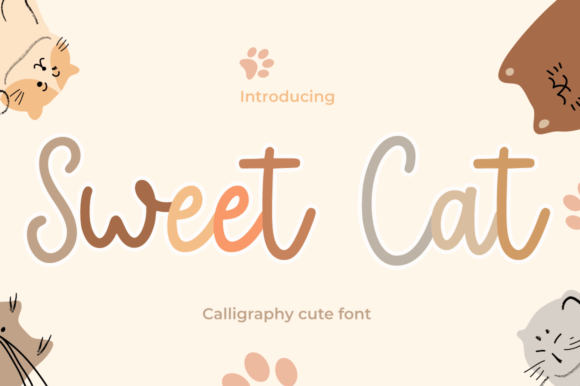
Finding a font that feels both personal and professional can be a challenge. Sweet Cat is a handwritten script font designed to bridge that gap, offering a calligraphy-inspired aesthetic with the reliability needed for modern design work. Its Regular variant provides a clean, flowing baseline, while subtle artistic swashes add character without overwhelming the text. This isn't a font that screams for attention; it invites it through casual elegance and versatile charm.
Where Sweet Cat Truly Shines
The strength of Sweet Cat lies in its adaptability. It transitions seamlessly from digital to print, from commercial branding to personal projects. Consider its use in logo design, where a custom wordmark needs to convey approachability and creativity. A bakery, boutique consultancy, or artisan brand can use Sweet Cat to establish a friendly, authentic brand identity that feels handcrafted. Similarly, in packaging design, it can elevate product labels for cosmetics, gourmet foods, or handmade goods, adding a layer of perceived care and quality.
For editorial design and publishing, Sweet Cat serves as an excellent display font for chapter titles, pull quotes, or magazine headers. It pairs effectively with clean serif fonts or neutral sans serif fonts for body text, creating a dynamic font pairing that guides the reader's eye. In the realm of web design, it can be used sparingly for impactful headlines or call-to-action buttons, though careful consideration of screen readability is always advised. Its application in social media graphics is particularly strong, helping posts and stories stand out with a personalized, human touch that algorithms and audiences respond to.
Making Smart Design Choices with a Script Typeface
Integrating any script font requires thoughtful execution. With Sweet Cat, the key is to leverage its personality without sacrificing clarity. Here are practical considerations for your projects:
- Evaluate the Project Fit: Sweet Cat is ideal for projects that benefit from warmth, creativity, and a personal connection. It’s perfect for wedding invitations, greeting cards, and branding for lifestyle-oriented businesses. For legal documents, technical manuals, or dense financial reports, a more neutral typeface would be a wiser choice.
- Master Font Pairing: To create visual hierarchy, pair Sweet Cat with a complementary typeface. A geometric sans serif font like Montserrat or a classic serif font like Lora can provide a stable, readable foundation for body copy, allowing Sweet Cat to command attention in headlines. Test pairings at various sizes to ensure harmony.
- Consider Readability: While beautiful, handwritten fonts are best used for short bursts of text. Use Sweet Cat for headings, subheadings, quotes, and logos. Avoid setting entire paragraphs in it, as the continuous flow can reduce reading speed. Always check kerning and spacing, especially in all-caps settings.
- Review Included Styles: The Regular variant of Sweet Cat is your workhorse. Explore its full character set, including alternates and swashes, to customize letterforms and add unique flair to specific letters. This can make your designs feel even more bespoke.
- Understand Licensing: As a premium font, Sweet Cat comes with a license. Ensure you have the correct commercial font license for your intended use—whether for a client's logo, a product sold online, or a published book. Respecting licensing protects your work and supports the type designers.
Think of Sweet Cat as a design asset in your toolkit, not a one-size-fits-all solution. Test it in context. Mock up a business card, a website hero section, or a social media post to see how its curves and spacing interact with your other design elements. Its ability to add depth to quotes, personalize signatures, and make headlines memorable is undeniable. By applying it strategically, you can harness its enchanting character to create work that feels both polished and genuinely human.